Psilocybe Cubensis
Psilocybe cubensis is a species of psychedelic mushroom whose principal active compounds are psilocybin and psilocin. Commonly called shrooms, magic mushrooms, golden tops, cubes, or gold caps, it belongs to the Hymenogastraceae family of fungi and was previously known as Stropharia cubensis.Psilocybe mushroom. The hallucinogenic ingredient of this mushroom, as in others of this genus, is psilocybin or psilocin. Somewhat surprisingly, however, this mushroom was not the first and most commonly used hallucinogen. Judging from the many illustrations of sacred mushrooms in ancient Mesoamerican art, some dating back to Olmec times, that distinction may go to the Amanita muscaria, or “fly agaric” mushroom of European folklore (Borhegyi de, 2013). The Psilocybe and Amanitamushrooms, along with the equally well known peyote cactus, are only part of a large pharmacopeia of hallucinogens used in Mesoamerica. These include Datura inoxia and other species of the genus Solandra; a potent species of tobacco called piciétl (Nicotiana rustica); and the seeds from two morning glories, the white flowered Turbina corymbosa, and the blue or violet flowered Ipomoea violacea, whose active principles are closely allied to synthetic LSD-25. Their psychedelic seeds were considered sacred to the point of divinity (Evans and Webster, 2010). There is mixed evidence for the use of highly poisonous toad toxin. In the mid-seventeenth century the English Dominican friar, Thomas Gage, reported that the Pokoman Maya of Guatemala steeped toads and tobacco in the fermentation of their ritual drink (Sharer, 1983). Whether this mixture was hallucinogenic rather than fatal is, however, a matter of some dispute
$200.00 – $1,300.00
PSILOCYBE CUBENSIS
- Psilocybe cubensis is a species of psychedelic mushroom whose principal active compounds are psilocybin and psilocin. Commonly called shrooms, magic mushrooms, golden tops, cubes, or gold caps, it belongs to the Hymenogastraceae family of fungi and was previously known as Stropharia cubensis
DESCRIPTION
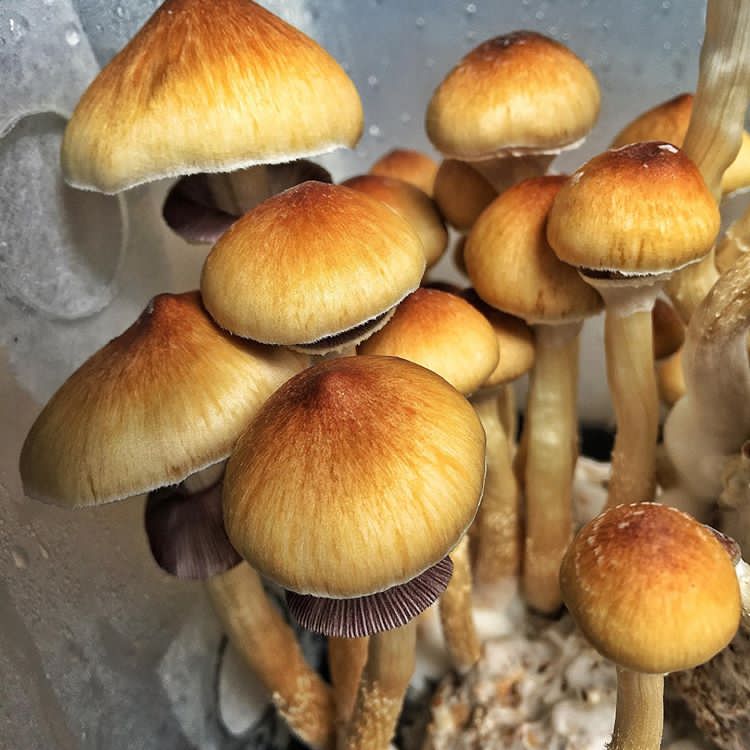
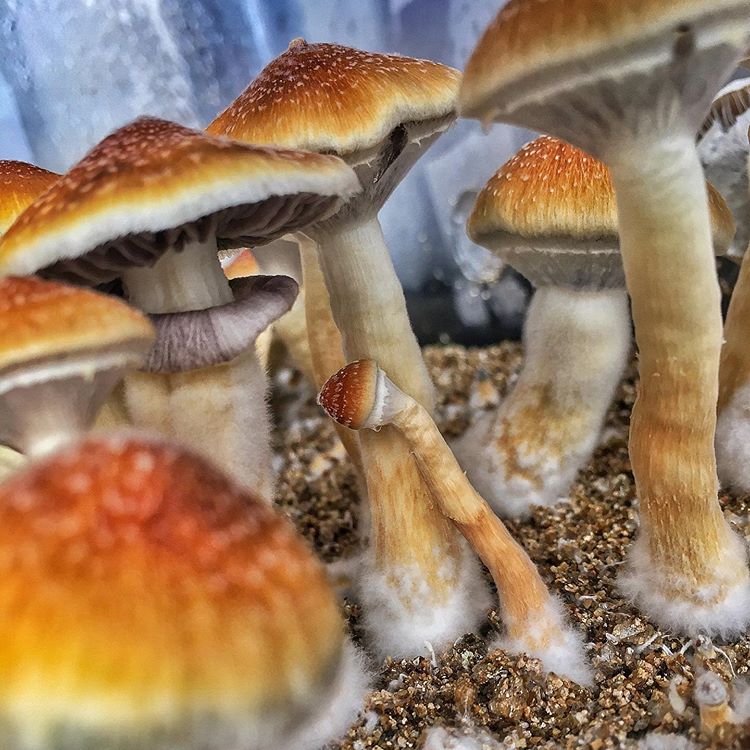
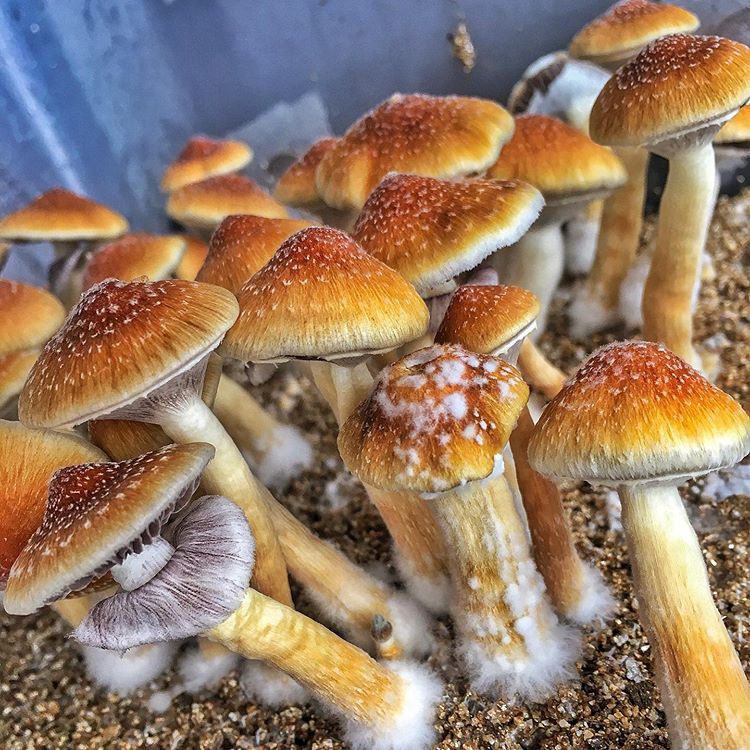
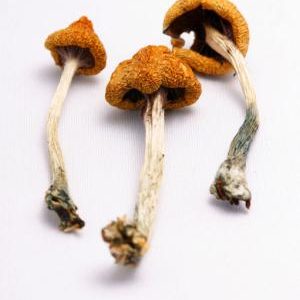
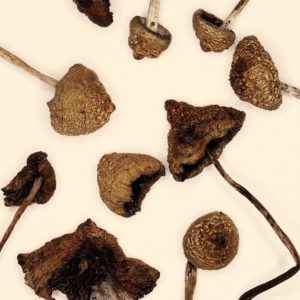
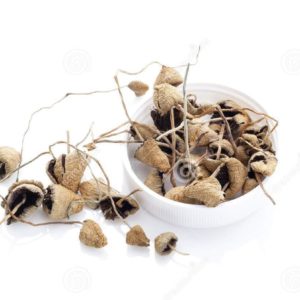
- Pileus: 2–8 cm (1–3 in), conic to convex, becoming broadly convex to plane in age but may retain a slight umbo, margin even, reddish-cinnamon brown when young and eventualy becoming golden brown in age, viscid when moist, hygrophanous, glabrous, sometimes with white universal veil remnants decorating the cap, more or less smooth. Flesh whitish, bruising blue in age or where injured.
- Gills: adnate to adnexed to sometimes seceding attachment, close, narrow to slightly wider towards the center, at first pallid to gray, becoming dark purplish to blackish in age, somewhat mottled, edges remaining whitish.
- Spore print: dark purple brown
- Stipe: 4–15 cm (2–6 in) long, 0.5–3.8 cm (0.2–1.5 in) thick, white to yellowish in age, hollow or somewhat stuffed, the well developed veil leaves a persistent white membranous annulus whose surface usually becomes concolorous with the gills because of falling spores, bruising blue or bluish-green when injured.
- Taste: farinaceous
- Odor: farinaceous
- Microscopic features: spores 11.5–17 x 8–11 µm, subellipsoid, basidia 4-spored but sometimes 2- or 3-, pleurocystidia and cheilocystidia present.
- Psilocybe cubensis is probably the most widely known of the psilocybin-containing mushrooms used for triggering psychedelic experiences after ingestion. Its major psychoactive compounds are:
- Psilocybin (4-phosphoryloxy-N,N-dimethyltryptamine)
- Psilocin (4-hydroxy-N,N-dimethyltryptamine)
- Baeocystin (4-phosphoryloxy-N-methyltryptamine)
- Norbaeocystin (4-phosphoryloxytryptamine)
The concentrations of psilocin and psilocybin, as determined by high-performance liquid chromatography, are in the range of 0.14–0.42% and 0.37–1.30% (dry weight) in the whole mushroom, 0.17–0.78% and 0.44–1.35% in the cap, and 0.09 and 0.30%/0.05–1.27% in the stem but vary respectively.
Individual brain chemistry but psychological predisposition play a significant role in determining appropriate doses. For a modest
| Weight | N/A |
|---|---|
| QUANTITY | OZ, QP, HP, POUND |
Based on 0 reviews
Be the first to review “Psilocybe Cubensis”
Related products
-
Magic Mushroom Grow Kits, Psychedelic Mushroom
Psilocybe Azurescens
New product
Psilocybe Azurescens – Seaside is an exclusive new strain, only offered at here at MushroomPrints.com It was discovered in the wild in 2009 It is simply a beautiful strain. Azures in general have a psilocybin rate of about 1.8 making them over 3 times stronger then any cubensis (0.5), the most potent discovered thus far. This strain will blow your mind, under the scope.
SKU: n/a -
Magic Mushroom Grow Kits, Psychedelic Mushroom
Psilocybe semilanceatas
FAMILY: Strophariaceae
GENUS: Psilocybe
SPECIES: Semilanceata
COMMON NAMES: Blue Leg, Liberty Caps, Meditationspilz, Magic Mushrooms, Narrenschwamm, Paddlestool, Pixie Caps, Psilo, Schwammerl, Shrooms, Witch Cap, ZwergenhutPsilocybe cubensis can be found where humidity is above 85% a lot of the time, and where grass-eating mammals are. The reason cubensis grows commonly on the dung of these animals is because they have no or very little stomach acid. Buy Psilocybe semilanceata for microdosing
SKU: n/a -
Colonization and Inoculation, Grow Kits FreshMushrooms®, Grow Kits without Mycelium, Magic Mushroom Grow Kits, Psychedelic Mushroom
Psilocybe baeocystis
 Colonization and Inoculation, Grow Kits FreshMushrooms®, Grow Kits without Mycelium, Magic Mushroom Grow Kits, Psychedelic Mushroom
Psilocybe baeocystis
Psilocybe baeocystis is apsilocybin mushroom of the family Hymenogastraceae. It contains the hallucinogenic compounds psilocybin, psilocin and baeocystin. The species is commonly known by various names such as bottle caps, knobby tops, blue bells, olive caps.
SKU: n/a -

There are no reviews yet.